Building Your Exercise Library: The Foundation of Great Programming
Discover how to build an exercise library that saves time, improves workout quality, and helps personal trainers scale programming without losing personalization.
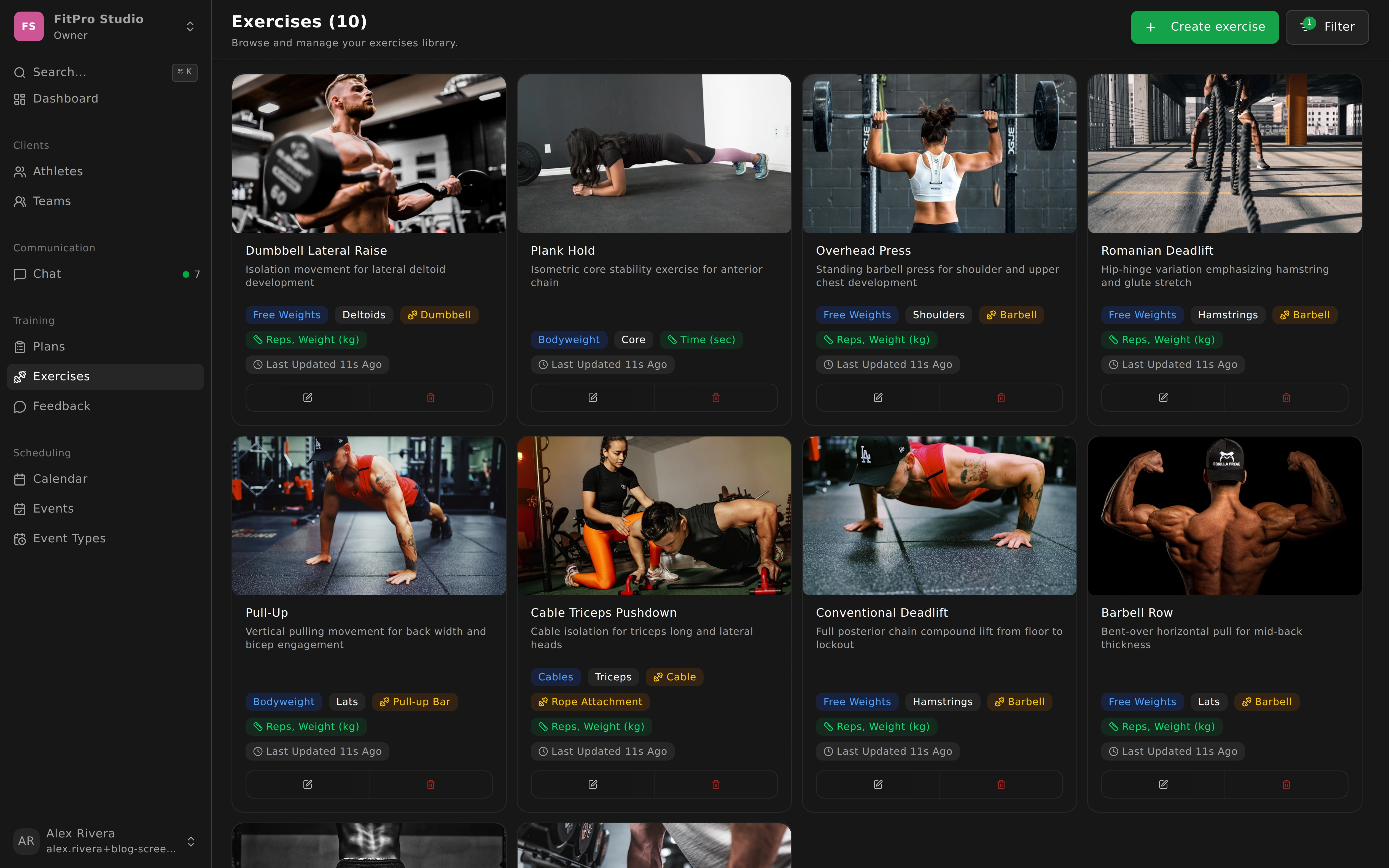
Building Your Exercise Library
Most trainers do not lose time because they are slow. They lose time because they repeat the same setup work every single week.
You open a client plan, need a basic movement, and create it again from scratch. Name, instructions, cues, media, tags. Then you do the same tomorrow for another client.
A structured exercise library turns that repeated effort into a one-time investment.
Think of Your Library as Coaching Infrastructure
A good library is not a storage folder. It is the infrastructure behind your programming decisions.
When entries are complete and organized, you can build programs quickly without dropping quality. You keep technical cues consistent. You reduce duplicate exercises with slightly different names. You adapt plans faster when clients need alternatives.
In other words, your library protects both speed and standards.
What Makes an Exercise Entry Truly Useful
The best entries are written for future-you.
Yes, name and category matter. But what really saves time later are details like coaching cues, progression ideas, regressions, and media references that remove ambiguity.
If an entry is too generic, you will still need to stop and rethink every time you use it. If an entry is complete, you can program decisively.
A practical rule: every exercise should be understandable even if you revisit it after six months.
Start Lean, Then Expand Intelligently
Many coaches try to build a huge library in one week and burn out. A better approach is phased:
- Start with your most-used movements.
- Add variants you prescribe frequently.
- Expand by context: home training, limited equipment, shoulder-friendly options, travel sessions.
OwnFit already gives you a strong base of built-in exercises, so you can focus custom work where it matters most for your method.
Tagging Is Where Scalability Happens
Tags are often treated as optional. They are not.
Good tagging lets you find exactly what you need when programming under time pressure. For example, you may need a beginner-friendly push exercise with minimal shoulder stress and dumbbell equipment only. Without tags, that filter becomes memory-dependent. With tags, it takes seconds.
The key is consistency. Choose a small vocabulary and reuse it.
Maintain the Library Like You Maintain Programming
Your coaching evolves every month. Your library should evolve too.
When you discover a better cue, update the entry. When a variation underperforms with clients, replace it. When new equipment is introduced, add relevant options.
A quarterly library review is usually enough to keep quality high without creating extra admin burden.
The Payoff Is Bigger Than Time Saved
A strong exercise library does save hours, but the deeper benefit is reliability.
Clients get clearer plans. Coaches in your team use the same standard. Adjustments happen faster during busy weeks.
And when your client base grows, you do not feel like you are rebuilding your process each time.
Build once, improve continuously, and let your library carry more of the workload.