The Power of Progress Tracking: Keeping Clients Motivated
Understand how progress tracking improves client motivation and retention by making fitness improvements visible, measurable, and easier to coach.
The Power of Progress Tracking
Motivation is powerful, but it is unstable. Clients feel highly motivated in week one, uncertain in week three, and maybe frustrated in week six.
Progress tracking is what keeps the journey grounded when emotions fluctuate. It turns “I think I am improving” into “I can see I am improving.”
Why Visibility Matters So Much
Many clients quit not because they are failing, but because they cannot clearly recognize progress.
Strength gains can be subtle. Body composition changes can be slower than expected. Energy and movement quality often improve before aesthetics do.
If those signals are not visible, the client assumes nothing is working. Tracking prevents this false conclusion.
Go Beyond One-Dimensional Metrics
Good tracking includes more than body weight. Performance markers, session completion, perceived effort, and qualitative notes together create a full picture.
For example, maybe the scale is stable, but training volume increased significantly and recovery is better. That is meaningful progress.
When clients and coaches see multiple dimensions, decisions become smarter and motivation becomes more resilient.
Build a Reliable Feedback Loop
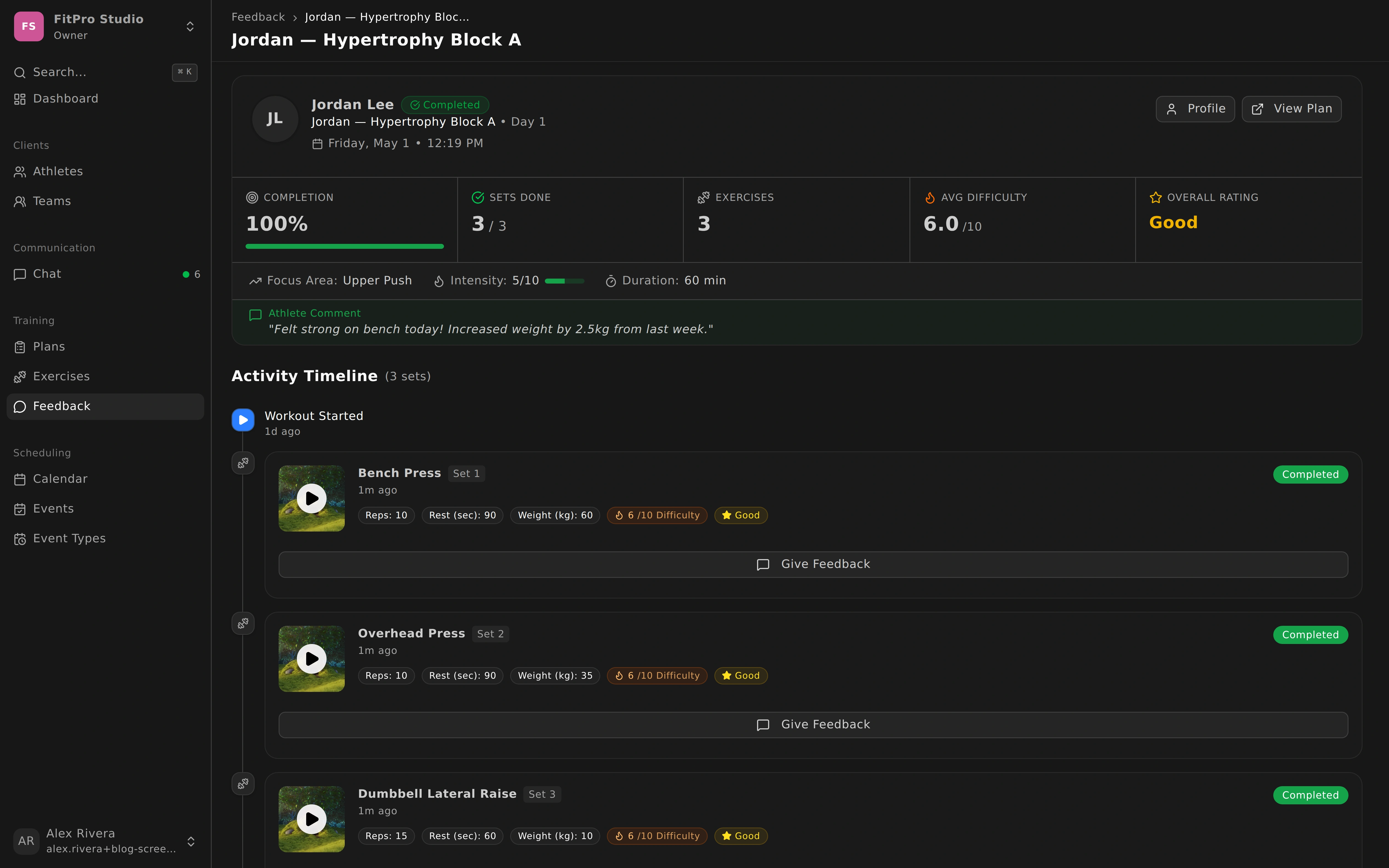
OwnFit allows clients to report what actually happened in each session: executed sets and reps, difficulty, completion status, and optional notes or form videos.
This closes the loop between prescription and reality.
Without this loop, coaches program in the dark. With this loop, coaches adapt quickly: reduce load when fatigue rises, change exercises when adherence drops, progress intensity when targets are exceeded.
Coaching Quality Improves With Pattern Recognition
Single sessions can be misleading. Patterns over time are where value appears.
Tracking helps you spot:
- early plateaus before they become discouraging
- repeating bottlenecks in specific exercises
- lifestyle stress impacting performance
- readiness for progression without guesswork
That makes your coaching feel proactive, not reactive.
Progress Tracking Also Strengthens Retention
Clients who can see proof of progress are more likely to stay committed through difficult phases. They trust the process because they have evidence, not only encouragement.
This trust leads to longer relationships, better referrals, and stronger long-term outcomes.
In short, tracking is not “extra admin.” It is a retention strategy.
Make Progress Easy to Understand
The goal is not to overwhelm clients with data. The goal is to make relevant progress obvious.
Celebrate consistency streaks. Highlight meaningful milestones. Use feedback to explain adjustments in plain language.
When clients understand why the plan evolves, they feel involved instead of judged.
Progress is happening more often than clients realize. A good tracking system makes sure they can actually see it.